

You've just anchored in the turquoise waters off Elliott Key, but as you step onto the deck, the searing heat of the fiberglass forces a frantic retreat for your sandals. It's a common frustration for South Florida boaters. A beautiful day on the water shouldn't be defined by the sting of an overheated vessel or the damp, sour smell of aging marine carpet. Finding boat flooring that stays cool is not just about comfort; it's about reclaiming your time on the water for your family, your guests, and your pets.
We believe a premium vessel requires a surface that matches its performance. You deserve a deck that remains soft and inviting even when the midday sun hits its peak. This guide explores the advanced material science and strategic color choices that transform a scorching deck into a temperature-stable sanctuary. Precise measurement. Custom CNC routing. Professional on-site installation. We will examine why high-density, closed-cell PE/EVA foam is the definitive solution for heat resistance. You will learn how a bespoke decking solution provides the ultimate thermal barrier and aesthetic upgrade for your vessel.
Key Takeaways
- Analyze the thermal conductivity of marine materials to understand why traditional fiberglass decks act as heat sinks in the South Florida sun.
- Discover the advantages of high-density PE/EVA foam as the premier choice for boat flooring that stays cool while providing a cushioned, premium feel.
- Implement strategic color palettes that achieve a sophisticated aesthetic while maximizing light reflectance to minimize heat absorption.
- Maintain your vessel’s comfort with specific cleaning habits that prevent salt crystals and debris from acting as thermal conductors.
- Experience the benefit of a precision-engineered fit that eliminates exposed "hot spots" through a professional, mobile installation service.
The Science of Heat: Why Traditional Boat Decks Burn Your Feet
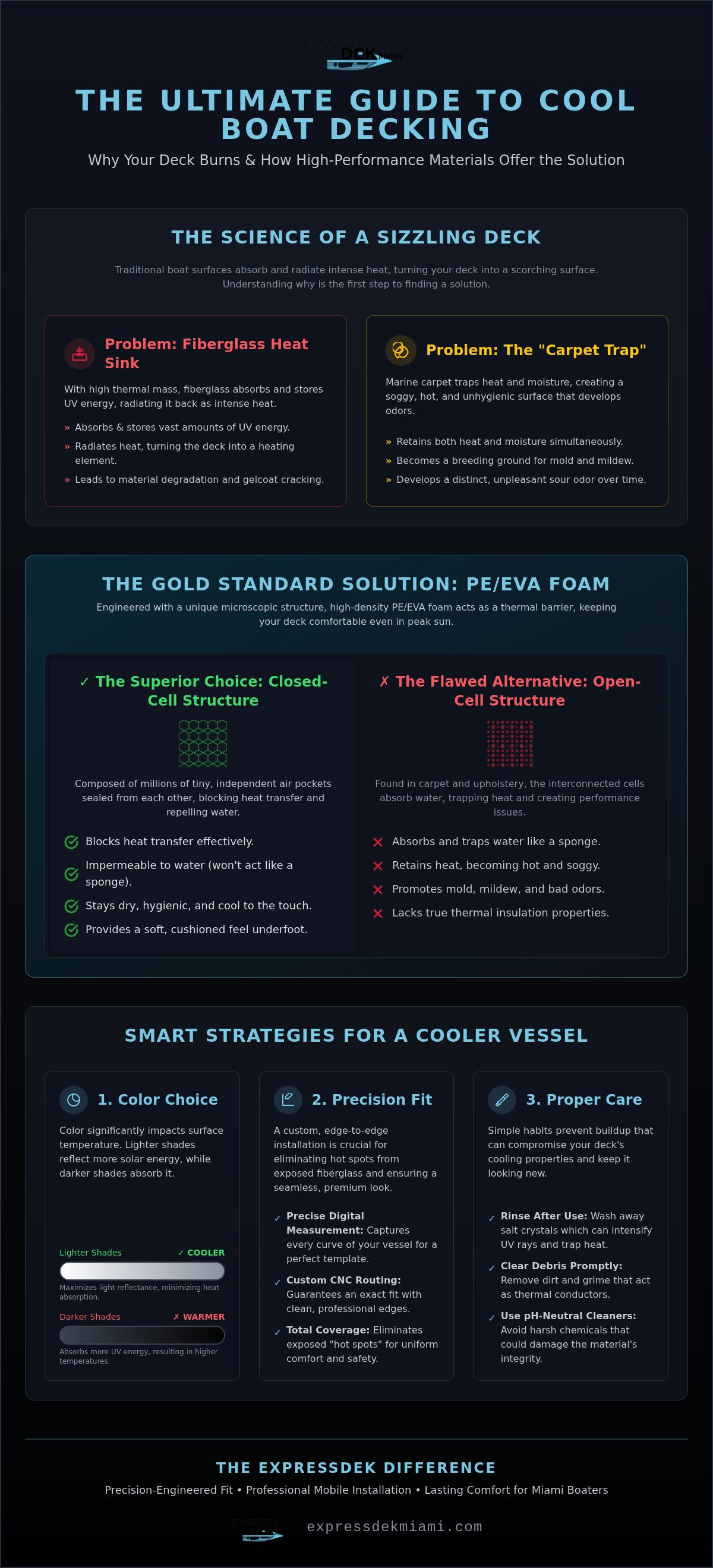
Understanding the physics of your vessel's surface is the first step toward achieving a comfortable environment. Thermal conductivity is the scientific rate at which heat passes through a material. On a standard boat, fiberglass acts as a massive heat sink. It possesses a high thermal mass, meaning it absorbs vast amounts of UV energy and stores it deep within its structure. This stored energy doesn't just dissipate; it radiates back up, turning your deck into a literal heating element. Over time, these extreme surface temperatures don't just burn your feet. They can lead to deck degradation, causing gelcoat to hairline crack or resins to lose their structural integrity.
Many owners turn to marine carpet as a solution, but this often leads to the "Carpet Trap." Carpet fibers may feel softer, but they retain heat and moisture simultaneously. This combination creates a soggy, hot surface that eventually develops a distinct, unpleasant odor. To find boat flooring that stays cool, you must look beyond traditional coverings toward materials engineered to resist heat transfer. Reliable performance. Sophisticated design. Functional excellence.
Thermal Conductivity: Fiberglass vs. Synthetic Materials
The speed at which heat moves from a surface to your skin depends on density. High-density materials, like fiberglass or solid rubber, transfer thermal energy almost instantly. This is why a fiberglass deck feels significantly hotter than it actually is. Even white fiberglass isn't as cool as many assume. While it reflects a portion of visible light, it still absorbs substantial infrared radiation. In contrast, specialized synthetics like Ethylene-vinyl acetate (EVA) foam feature a closed-cell structure. These microscopic air pockets act as a natural insulator. They break the path of thermal transfer, ensuring the heat stays in the air rather than in your feet. Low conductivity. Superior insulation. Lasting comfort.
The Impact of Humidity and Salt on Surface Heat
South Florida’s environment adds unique challenges to deck management. Salt crystals are notorious heat-traps. As seawater evaporates, it leaves behind microscopic prisms that can actually intensify heat absorption by focusing UV rays directly onto the surface. Humidity also plays a role in how we perceive temperature. High moisture levels in the air prevent the body's natural cooling through evaporation. This makes a hot deck feel even more punishing. While some suggest "breathable" woven surfaces, these often fail because the material itself still reaches high temperatures. A true solution for boat flooring that stays cool requires a non-conductive barrier that rejects salt buildup and remains comfortable regardless of the Miami humidity.
EVA Foam: The Gold Standard for Boat Flooring That Stays Cool
Transitioning from the high thermal mass of fiberglass to a more advanced surface requires a shift in material science. Ethylene-Vinyl Acetate (PE/EVA) foam has emerged as the definitive choice for owners seeking a deck that remains comfortable at high noon. Unlike traditional surfaces that store heat, EVA foam is a low-conductivity material. It acts as an insulator rather than a conductor. This means that while the sun beats down on the deck, the heat remains on the surface rather than penetrating deep into the material or radiating into your feet. It is the most effective boat flooring that stays cool because it disrupts the thermal transfer cycle described in the previous section.
The performance of these materials is not accidental. Adhering to industry standards for marine deck coverings ensures that the materials used can withstand the unique rigors of a saltwater environment. High-density EVA foam provides a sophisticated aesthetic that rivals traditional wood without the maintenance or the heat retention. It offers a soft, cushioned feel underfoot. It reduces fatigue during long days on the water. It transforms the physical experience of moving across your vessel.
Closed-Cell vs. Open-Cell Foam
The secret to thermal stability lies in the "closed-cell" structure of the foam. In this configuration, the material is composed of millions of microscopic, independent air pockets. These pockets are sealed off from one another. This prevents the foam from acting like a sponge. While open-cell materials, such as marine carpet or basic upholstery foam, absorb water and trap heat, closed-cell foam remains impermeable. It stays dry. It stays hygienic. It stays cool. The high cell density creates a robust thermal barrier that protects your feet while providing the necessary "give" for a premium, cushioned feel. If you are considering an upgrade, exploring custom boat decking solutions is the most efficient way to ensure your material choice matches your vessel's specific needs.
UV Inhibitors and Longevity in the Florida Sun
South Florida’s UV index is notoriously aggressive. Without proper protection, synthetic materials can undergo "chalking," a process where the surface breaks down into a fine powder that absorbs even more heat. Modern marine-grade foam is infused with high-grade UV inhibitors during the manufacturing process. These chemical stabilizers are essential for maintaining the material's integrity and color. Advanced UV inhibitors preserve the molecular structure of the foam to prevent breakdown under 2026 solar levels. This ensures your deck doesn't just look better on day one; it retains its cooling properties and structural resilience for years of heavy use.
Color Strategy: Choosing the Right Shades for Maximum Cooling
While material choice provides the foundation, color selection is the final variable in the cooling equation. The physics are straightforward. Darker pigments absorb a broader spectrum of light energy, converting it into heat. Lighter shades reflect that energy away from the deck. For those seeking boat flooring that stays cool, the goal is to balance aesthetics with thermal performance. Many boaters desire the classic look of teak but fear the legendary heat of dark wood. We solve this "Faux Teak" dilemma by utilizing dual-layer color strategies. By routing a light top layer, such as a soft tan, over a darker base, you achieve the traditional plank look without the blistering surface temperatures. Additionally, specific textures like a brushed finish create microscopic shadows. These "micro-shadows" reduce the total surface area in direct contact with the sun, effectively lowering the perceived temperature of the material.
Strategic design. Precision routing. Thermal efficiency. This approach ensures your vessel remains comfortable without sacrificing the high-end look you expect. By combining the closed-cell material science discussed previously with a light-reflective palette, you create a surface that is both functional and visually striking.
The Best Colors for Miami Boating
Miami's intense UV levels demand a strategic palette. The most effective options for maintaining a comfortable deck include Mist Grey, Sand, and Light Blue tones. These colors provide high reflectance while effectively masking the inevitable salt spray and light debris of a day at sea. Tan and camel shades represent a functional middle ground. They offer a warmer aesthetic but will naturally retain more heat than grey. We strongly advise avoiding solid black or dark navy in high-traffic areas like swim platforms or cockpit walkways. These dark tones can reach temperatures that make them unsuitable for bare feet or pets during peak summer hours.
Thermal Testing: Color Temperature Differences
Data-driven comparisons reveal the impact of these choices. In direct sunlight, a Light Grey EVA surface can remain significantly cooler than dark fiberglass. When comparing foam shades, a Dark Mocha surface often registers 15 to 20 degrees hotter than a Mist Grey equivalent under identical conditions. The finish also matters. A brushed surface dissipates heat more efficiently than a smooth, embossed texture. This combination of light color and textured finish creates the ultimate thermal barrier. It ensures that your vessel remains a sanctuary, even during the peak of a South Florida summer. Specialized selection. Expert guidance. Superior results.
Practical Maintenance to Maintain Your Deck's Cooling Properties
Maintaining a deck that stays comfortable requires more than just selecting the right material. It demands a disciplined commitment to surface hygiene. While high-density PE/EVA foam provides an exceptional thermal barrier, surface contaminants can bridge the gap between the sun's energy and your feet. Dirt, grime, and environmental pollutants act as heat conductors. They sit on top of your premium flooring, absorbing UV radiation and transferring it directly to the skin. To ensure your boat flooring that stays cool remains effective throughout the season, you must prevent these thermal bridges from forming. Precise care. Consistent results.
The 'Clean Deck, Cool Deck' Philosophy
Organic debris is a primary culprit for rising deck temperatures. Sand, fish blood, and tracked-in soil have significantly higher thermal mass than specialized closed-cell foam. When left on the surface, these materials heat up rapidly and hold that energy. A simple, consistent maintenance routine is essential for owners navigating the waters from Miami to Palm Beach. Clean the deck. Rinse with fresh water. Dry thoroughly. Following a day on Biscayne Bay, a thorough fresh-water rinse is non-negotiable. This process removes salt crystals which act as microscopic heat-traps, focusing UV energy into the material.
Avoid harsh, solvent-based chemicals or high-pressure washers at close range. These can degrade the cellular structure of the foam and strip away the vital UV inhibitors discussed in earlier sections. We recommend using pH-neutral marine soaps specifically formulated for synthetic decking. If you want to ensure your vessel is equipped with the most resilient materials available, you can explore our custom boat decking solutions to see how professional-grade foam resists common stains and heat-buildup.
Seasonal Checks and UV Protection
The 2026 Florida climate presents an aggressive environment for any marine material. Seasonal inspections are the best way to protect your investment. Look for "hot spots" where the deck might be lifting or thinning. These areas often indicate a breakdown in the adhesive or structural compromise from excessive heat exposure. Early detection is key. Identifying UV damage before it compromises the deck's temperature is a matter of visual inspection. Signs include subtle color fading or a change in the material's texture. If the surface begins to feel tacky or displays a chalky residue, the molecular structure is likely failing.
Professional inspections play a vital role in extending the life of your cool deck. A specialist can verify the integrity of your installation and ensure the thermal barrier remains intact. This proactive approach maintains the premium aesthetic of your vessel while guaranteeing comfort for your family and pets. Meticulous oversight. Expert partners. Lasting performance.
The ExpressDek Difference: Custom Cooling for Miami Vessels
Achieving a deck that remains comfortable in the intense South Florida sun requires more than just high-quality material. It requires a flawless execution. Even the most advanced boat flooring that stays cool can lose its effectiveness if the installation leaves large sections of fiberglass exposed. These gaps act as thermal bridges, allowing heat to radiate from the vessel's structure into the surrounding area. At ExpressDek Miami, we address this through a meticulous, custom-fit approach. We eliminate "hot spots" by ensuring maximum coverage of your deck. Our process is designed for the discerning owner who values both thermal performance and a bespoke aesthetic. Professional consultation. Digital accuracy. Seamless integration.
Our expert design team provides the guidance necessary to navigate the color strategies discussed in earlier sections. We don't just provide samples; we analyze how your vessel is used. Whether you're fishing in the Gulf Stream or lounging at the sandbar, we help you select the ideal heat-resistant color palette to match your lifestyle. This professional oversight ensures that your investment provides the highest possible thermal barrier and a premium finish that enhances your vessel's value.
Mobile Service from Palm Beach to Homestead
Convenience is a cornerstone of our service model. We understand that your time is valuable. Our mobile units bring our entire design and templating suite directly to your dock. We serve major boating hubs across South Florida, including Miami Beach, Coral Gables, and Pompano. This on-site approach allows us to account for every unique curve and hardware placement on your vessel. From center consoles to multi-deck yachts, our mobile service ensures a perfect fit without the need to transport your boat to a facility. Measure on-site. Design with precision. Install with care. This streamlined lifecycle moves your project from concept to completion with modern efficiency.
Precision Craftsmanship for Maximum Coverage
We utilize advanced digital templating to capture the exact dimensions of your deck. This technology allows us to cover every inch of sun-exposed fiberglass that would otherwise reach punishing temperatures. By maximizing the surface area of the PE/EVA foam, we create a consistent thermal sanctuary across the entire vessel. Our customized patterns don't just provide non-slip safety; they are engineered for aesthetic cooling. The result is a deck that remains soft, cushioned, and inviting even when the Miami heat is at its peak. Don't settle for partial coverage that leaves your feet vulnerable to the sting of hot fiberglass. Schedule your on-site measurement today and experience the difference that precision craftsmanship makes for your time on the water.
Transform Your Time on the Water
Reclaiming your deck from the punishing South Florida sun is a matter of precision and science. We have examined how high-density EVA foam breaks the cycle of heat absorption that plagues traditional fiberglass and carpet. By implementing strategic color palettes and maintaining surface hygiene, you ensure your vessel remains a sanctuary for family and pets. Choosing boat flooring that stays cool is a definitive investment in both the aesthetic and functional longevity of your boat.
Our mobile units serve all of South Florida, bringing professional measurement and design directly to your dock. We utilize precision digital templating to guarantee a 100% custom fit that eliminates exposed hot spots. Using only the highest-grade UV-resistant EVA foam materials, we deliver a surface that provides a soft, cushioned feel without compromising on durability. Expert design. Precision fit. Lasting comfort. It's time to secure the professional finish your vessel deserves. Enjoy every moment of your next excursion with a deck that stays inviting all day long.
Get Your Custom Cooling Deck Quote from ExpressDek Miami
Frequently Asked Questions
Does EVA foam boat flooring really stay cooler than fiberglass?
Yes, high-density PE/EVA foam remains significantly cooler than fiberglass because it acts as an insulator rather than a conductor. While fiberglass absorbs and stores solar energy, the closed-cell structure of the foam prevents heat from penetrating the surface. This creates a reliable thermal barrier. It ensures your feet remain comfortable even during peak UV hours in South Florida. Reliable protection. Lasting comfort.
What is the best color for boat flooring to keep it cool in Florida?
Lighter shades such as Mist Grey, Sand, or Light Blue are the most effective choices for maintaining a comfortable deck temperature. These colors reflect a higher percentage of solar radiation away from the boat. While tan shades perform well, we recommend avoiding solid dark colors for high-traffic areas. This strategic selection is the most reliable way to ensure you have boat flooring that stays cool.
Can I install cool boat flooring myself or do I need a professional?
While DIY options exist, professional installation is essential for maximizing heat resistance. Precision digital templating ensures that every inch of sun-exposed fiberglass is covered, eliminating potential hot spots. Expert installers also provide the necessary surface preparation for a permanent bond. This meticulous approach guarantees both the high-end aesthetic finish and the long-term thermal performance of your vessel’s new surface. Professional results. Expert partnership.
How much cooler is EVA foam compared to traditional marine carpet?
PE/EVA foam provides a superior cooling experience compared to marine carpet because it does not trap moisture or organic debris. Traditional carpet can become a damp heat-sink that retains high temperatures and develops unpleasant odors. The closed-cell structure of the foam remains impermeable. It provides a consistently cooler, drier, and more hygienic surface for your passengers throughout the hottest months of the year.
Do darker colors in EVA foam get as hot as dark fiberglass?
Darker EVA foam shades will not reach the extreme temperatures of dark fiberglass, but they do retain more heat than lighter foam options. The material's low thermal conductivity still protects your feet from the searing burn of raw fiberglass. However, for maximum cooling efficiency, we suggest using dual-layer strategies. This allows for a darker base with a lighter top layer to balance sophisticated style and functional comfort.
What happens if my boat flooring gets salt on it? Does it get hotter?
Salt buildup can negatively impact surface temperature because dried crystals act as microscopic prisms that focus UV energy. This can intensify the heat felt on the deck. Regular fresh-water rinsing is the most effective way to prevent these crystal heat-traps from forming. Maintaining a clean surface is a simple yet vital step in ensuring your boat flooring that stays cool performs as intended. Consistent care. Optimal performance.
How long does heat-resistant boat flooring last in the Miami sun?
High-grade marine foam infused with advanced UV inhibitors typically lasts five to seven years in the aggressive Miami climate. Longevity depends on consistent maintenance and the quality of the initial installation. Regular cleaning and the use of protective covers when the boat is not in use will help preserve the material’s molecular structure. This proactive care ensures the cooling properties and structural integrity remain intact for several seasons.
Is EVA foam flooring safe for pets' paws during a hot day?
Yes, PE/EVA foam is the safest decking option for pets because it stays significantly cooler than exposed fiberglass or rubber. The cushioned, non-slip texture also provides better stability for paws while the boat is in motion. By choosing a light-colored foam, you create a pet-friendly environment where your dogs can move comfortably across the deck without the risk of thermal injury or discomfort. Soft. Secure. Cool.


